Supply and Demand Zones: The Ultimate Trading Tutorial for Consistent Profits
Master the art of identifying and trading supply and demand zones with this comprehensive guide. Learn professional techniques, avoid common mistakes, and start trading with confidence.
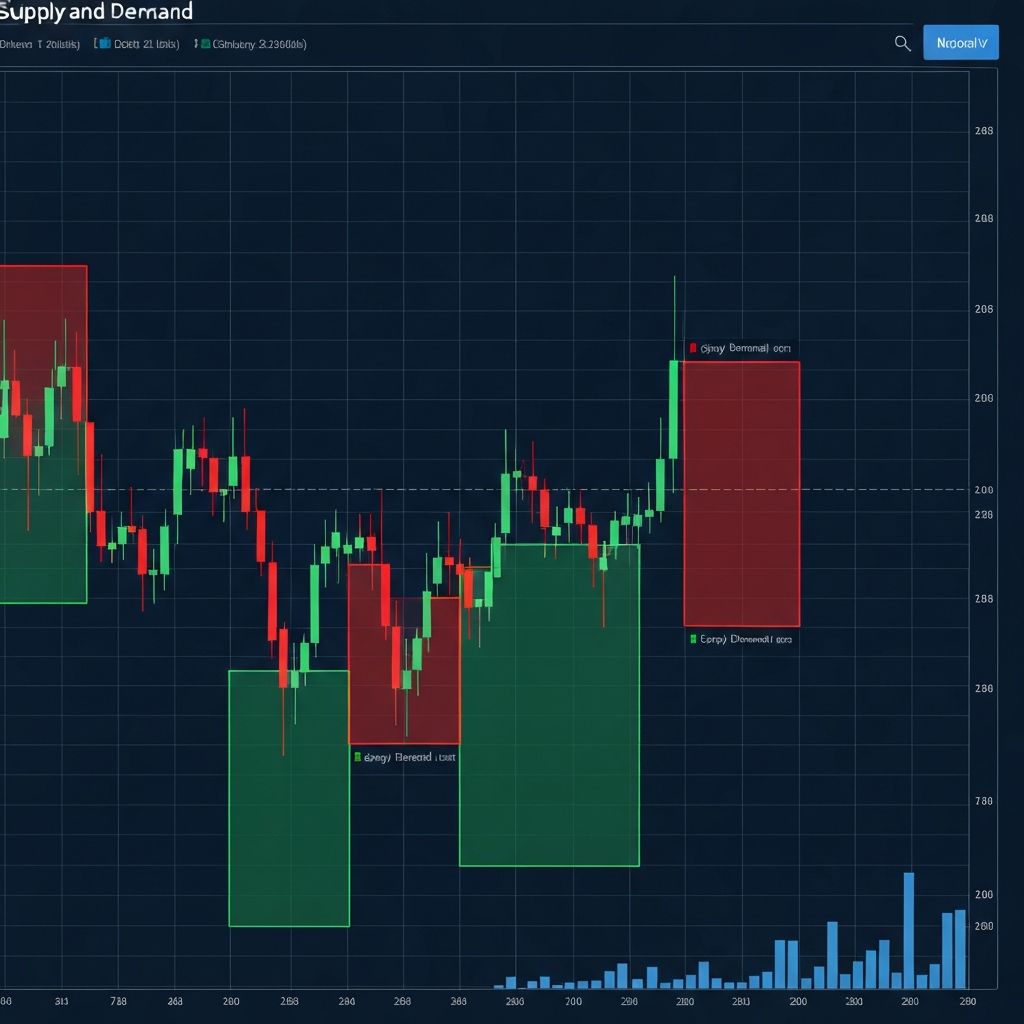
Supply and demand zones are the foundation of price action trading. Unlike traditional support and resistance lines, these zones represent areas where institutional traders have placed massive orders, creating imbalances that drive price movement. Understanding how to identify and trade these zones can transform your trading results.
In this comprehensive tutorial, you will learn everything you need to know about supply and demand zones, from basic identification to advanced trading strategies. Whether you trade forex, stocks, or cryptocurrencies, these principles apply universally across all markets and timeframes.
What Are Supply and Demand Zones?
Supply and demand zones are specific price areas on a chart where significant buying or selling pressure exists. These zones form when large institutional orders cannot be filled completely at once, leaving unfilled orders that price tends to return to.
Key Concept
Supply zones are areas where sellers overwhelm buyers, causing price to drop. Demand zones are areas where buyers overwhelm sellers, causing price to rise. The imbalance between supply and demand is what moves markets.
Supply Zones Explained
A supply zone forms when there are more sellers than buyers at a particular price level. This excess of supply causes price to fall. Key characteristics of supply zones include:
- Located above current price after a strong downward move
- Represent areas where institutional sellers placed large orders
- Often form at swing highs before significant price drops
- Create resistance when price returns to test the zone
Demand Zones Explained
A demand zone forms when there are more buyers than sellers at a particular price level. This excess of demand causes price to rise. Key characteristics of demand zones include:
- Located below current price after a strong upward move
- Represent areas where institutional buyers placed large orders
- Often form at swing lows before significant price rallies
- Create support when price returns to test the zone
How to Identify Supply and Demand Zones
Identifying high-quality supply and demand zones requires understanding price action patterns. Here is a systematic approach to finding the best zones on any chart:
5-Step Zone Identification Process
- 1Find the Explosive Move
Look for strong, impulsive price movements with large candles moving in one direction
- 2Locate the Origin
Find where the move started - this is your potential zone
- 3Identify the Base Candles
Look for consolidation or small candles before the explosive move
- 4Draw the Zone Boundaries
Mark from the lowest wick to the highest body of the base candles
- 5Validate Zone Quality
Check if the zone meets quality criteria before adding to your chart
Zone Formation Patterns
Supply and demand zones typically form in one of four patterns. Understanding these patterns helps you identify zones more quickly and accurately:
Rally-Base-Rally (RBR)
Creates a demand zone during an uptrend continuation
- Price rallies up
- Consolidates in a base
- Rallies up again
Drop-Base-Rally (DBR)
Creates a demand zone at trend reversal points
- Price drops down
- Consolidates in a base
- Rallies up strongly
Drop-Base-Drop (DBD)
Creates a supply zone during a downtrend continuation
- Price drops down
- Consolidates in a base
- Drops down again
Rally-Base-Drop (RBD)
Creates a supply zone at trend reversal points
- Price rallies up
- Consolidates in a base
- Drops down strongly
Zone Quality Factors: How to Find the Best Zones
Not all supply and demand zones are created equal. Learning to distinguish between high-quality and low-quality zones is essential for trading success. Here are the key factors that determine zone strength:
1. Strength of the Departure
The stronger the move away from the zone, the more unfilled orders remain. Look for explosive moves with large candles and minimal wicks.
Rule: The departure candle should be at least 2x the average candle size for that timeframe
2. Time Spent in the Zone
Less time spent at a price level means more unfilled orders. The best zones form quickly before the explosive move.
Rule: Ideal zones have 1-3 base candles maximum before the departure
3. Freshness of the Zone
Fresh zones that have never been tested are strongest. Each time price returns to a zone, some orders are filled.
Rule: Prioritize zones that have not been touched. Avoid zones tested more than twice.
4. Distance Traveled
The further price moves from the zone, the more significant the imbalance was. This indicates strong institutional interest.
Rule: Price should move at least 3x the zone height after departure for high-quality zones
10 Essential Rules for Trading Supply and Demand Zones
The Golden Rules
Always trade in the direction of the higher timeframe trend
Wait for price to return to the zone before entering
Use limit orders at the edge of zones for better entries
Place stop losses beyond the opposite edge of the zone
Target the next opposing zone for take profit
Never risk more than 1-2% per trade
Confirm zones on multiple timeframes for higher probability
Fresh zones are stronger than tested zones
The bigger the move from the zone, the stronger the zone
Be patient - not every zone will be traded
Common Mistakes to Avoid
Drawing Zones Too Large
Keep zones tight by focusing only on the base candles. Larger zones mean wider stops and worse risk-reward ratios. The zone should encompass only the consolidation area, not the entire move.
Trading Against the Trend
Counter-trend trades using supply and demand zones have lower probability. Always identify the higher timeframe trend first and trade zones that align with it for better results.
Ignoring Zone Freshness
Each time price tests a zone, orders are filled and the zone weakens. Trading zones that have been tested multiple times significantly reduces your edge. Prioritize fresh, untested zones.
Not Waiting for Price to Reach the Zone
Entering early because you think price might not reach the zone is a recipe for losses. Have patience and wait for price to actually enter your identified zone before taking a position.
Practical Trading Examples
Example 1: Trading a Fresh Demand Zone
Setup: EUR/USD daily chart shows a strong bullish trend. A fresh demand zone forms at 1.0850 after a drop-base-rally pattern.
Action: Place a limit buy order at 1.0860 (top edge of demand zone)
Stop Loss: 1.0820 (below the demand zone)
Take Profit: 1.0950 (next supply zone)
Risk-Reward: 40 pips risk / 90 pips reward = 1:2.25
Example 2: Trading a Supply Zone in Downtrend
Setup: GBP/USD is in a downtrend on the 4-hour chart. A supply zone forms at 1.2650 after a rally-base-drop pattern.
Action: Place a limit sell order at 1.2640 (bottom edge of supply zone)
Stop Loss: 1.2680 (above the supply zone)
Take Profit: 1.2550 (next demand zone)
Risk-Reward: 40 pips risk / 90 pips reward = 1:2.25
Multi-Timeframe Zone Analysis
The most powerful supply and demand trading setups occur when zones align across multiple timeframes. Here is how to implement multi-timeframe analysis:
Timeframe Hierarchy
Swing Traders
Weekly → Daily → 4H
Day Traders
Daily → 4H → 1H
Scalpers
4H → 1H → 15M
Your Zone Trading Checklist
Before Every Trade, Confirm:
Start Trading Supply and Demand Zones Today
Supply and demand zones provide a clear, logical framework for understanding price movement and finding high-probability trading opportunities. By mastering the concepts in this tutorial, you will be able to identify where institutional traders are placing their orders and trade alongside them.
Remember that success with supply and demand trading comes from practice and patience. Start by identifying zones on historical charts, then paper trade until you are consistently profitable. The principles work across all markets and timeframes, giving you a versatile trading approach.
Identify Supply and Demand Zones Automatically
Stop spending hours manually drawing zones on your charts. ChartLab-IQ uses advanced AI to instantly identify high-quality supply and demand zones on any chart, saving you time and improving your accuracy.